Tuesday, 17 July 2012

Grand theft auto Wishlist


Now that Grand Theft Auto V has officially been announced, the world’s gone into overdrive with speculation. We jump aboard the bandwagon with a few ideas we hope make it into the game. Rockstar, are you listening?

Better economy
Games like GTA IV and Red Dead Redemption allowed players to earn money through both main and side quests, but with nothing worth really spending your money on, your income felt useless. Ten hours into GTA IV, I had enough money to buy my own country, but all I had was weapons and ammunition. For GTA V, it would be nice if I could actually put my money to good use. At least this way I’m motivated to rake in the moolah.

Improved quest system
GTA IV had way too many “go here and kill this random dude” kind of quests for its own good. It was either that or uninteresting fetch quests. Rockstar definitely needs to add in a ton of mission variety into GTA V. Adding stealth missions would also be a good change of pace with the inclusion of silenced weapons and the ability to actually plan your missions a la Hitman. Stalk your prey and kill him/her when they enter a dark alley, sabotage the brakes in their cars to make it look like an accident, or enter their houses at night and kill them in their sleep. All effective ways to vanish without a trace. Plus, adding in the random encounters from Red Dead

Rewarding side quests
Side quests should also make sense and should reward the player with more than money. For example, tackling cop missions should give access to the police database. This way if you have to whack someone and know the places he visits regularly, you don’t have to tail him through all the traffic. Redemption would be a pretty sweet

Balance realism and fun
Rockstar should know when to keep the game realistic and when to let players have a good time. For GTA V, they should bring back some of the fun activities while keeping the game grounded in reality. For example, limit the amount of weapons a player can carry on them at a time just like in real life. Additional firepower can always be stored in your car trunk; a feature that was promised with GTA IV as well.

Customization
The character customization is GTA IV, simply put, sucked. A few shoes, suits and some raggedy pieces of clothing were all players could adorn Niko Bellic with. Even if Rockstar don’t want players to tweak facial features, they can very well add a plethora of customization options like they did in San Andreas. Customization shouldn’t be limited to the character. The tuner culture is still going strong on the West Coast, so they should allow players to deck out their rides any way they see fit. Similarly, a player should be able to deck out his arsenal to a certain extent as well. I mean, who doesn’t like wielding diamond-encrusted AK 47s?

Verticality
In an urban open world environment, it’s a real pity to restrict all the gun fights to the streets. GTA V should allow players to tackle them anyway they seem fit, so if I feel I’m at an advantage after climbing a roof top, let me do so. I’m not saying make me like Ezio from Assassin’s Creed, but adding a bit of verticality to this series wouldn’t really hurt. After all, that too was promised to us for GTA IV.

Better combat system
The hand to hand combat system in GTA IV was not all that hot. In fact, it was pretty rigid and useless. Implementing the one from L.A. Noire will go a long way towards making fist fights more immersive. Similarly, they need to tighten up gunplay as well; something on the lines of Red Dead Redemption with a smooth and fluid looking cover system to boot.

Set pieces
I know I’m a bit spoilt by the Uncharted series when it comes to phenomenal set pieces, but if anyone can pull something like this off, it’s Rockstar. With a place like LA, where earthquakes are a common occurrence, a mission featuring one would be sweet. Imagine having to speed away from an earthquake that’s inches away from swallowing your car up!

Sunday, 8 July 2012

The Future of Netbooks


A netbook may not be the best replacement for your laptop just yet, but a fewtechnological tweaks can help narrow the gap. 


A look at the Display Search reports shows that netbook sales grew by a staggering 103% in 2009  despite global recession. Despite a meagre 19% prediction in 2010 by Display Search’s forecasts, these devices cannot be brushed aside as a passing fad. While netbooks puts up a fi erce defence against  Tablet PCs, they certainly would not replace desktops or laptops in totality. But if netbooks do need to survive the competition, there is a need for constant evolution. Listed below are some of the upgrades we can expect soon.

BETTER PERIPHERAL MANAGEMENT
Netbooks are mostly not purchased in isolation; you would need to get some peripherals to ensure that you adjust to the dimensions and working of a netbook. Apart from basic peripherals like external DVD writers and mice, there are hordes of USB devices and netbook accessories available to personalize your netbook usage. However , many USB device today are version 3.0 compatible. Both USB devices and Bluetooth connectivity need to be abreast with prevalent  technologies in use

DEDICATED SOFTWARE SUPPORT
The biggest let down for netbook users in that not many applications are created keeping in mind this market segment. Using applications meant for laptops, notebook and desktop PCs becomes a problem even on high-end netbooks because of the small screen size. Thus, there is a need for applications, offi ce productivity tools, image editors, and games targeting netbooks.

OPERATING SYSTEM SUPPORT
While Microsoft does provide for a decent Windows 7 starter edition to work quite well with netbooks, there is room for more. Cost seems to be a very strong factor going in favor of netbooks, and thus, operating systems like Linux (like a lighter gOS Ubuntu variant) and Android would work best for netbooks.

BETTER SPEED
Keeping abreast with competition means faster speeds and higher performance. The Internet is no longer limited to text and images. The Web is all about staying connected and being live. Social networking phenomena, cloud computing and multiple avenues for streaming media have given a new lease of life to computing devices like smartphones and tablet PCs. Although netbooks support Wi-Fi connectivity, touch screens for faster data input and better connectivity using technologies like GPS and 3G is the way ahead. It also means netbooks need to have better processor capacity to handle these new technologies.

LONGER BATTERY LIFE
Netbooks have left laptops and notebooks way behind with its solid battery life and upgradeable lithium-Ion battery packs, but they face a stiffer challenge where longevity is concerned. Most handheld devices give you as much as a day of battery life to work with, while a netbook averages around 4-5 hours. As all other specifi cations on netbooks improve, battery life will take a beating if the technology doesn’t get better with time.

BETTER DIMENSIONS
If netbooks are to continue existing in the on-the-go genre of computing devices, they need to compete with devices that are shrinking by the day. While netbooks come with screen sizes between 7 and 13 inches and 75% to 85% smaller keyboards, they can get smaller still without compromising

Saturday, 7 July 2012

AMD Raedon HD 7970 Ghz Edition Released

When AMD released the HD 7970 last year, it was the fastest single-GPU graphics card on the market. That was until NVIDIA launched their GTX 680, which took the crown from AMD and left the 7970 with a bloody nose


Now AMD is back with a tweaked version of the HD 7970, called the HD 7970 GHz Edition, to take back what’s now rightfully theirs, the title of the fastest single-GPU graphics card.
As usual, AnandTech put the new card through its paces and found that it tied with the GTX 680 in single-monitor setups, however, the HD 7970 GHz Edition took the lead when it came to multi-monitor setups running at insane resolutions, which made it the overall winner in terms of pure FPS performance. However, they also noted that this performance comes at the cost, and that is higher power consumption and heat levels and significantly higher noise levels. They even went as far as to say it was one of the noisiest cards they ever tested.


Underneath the identical looking body (compared to the standard HD 7970), the HD 7970 GHz Edition has the exact same hardware. The changes come in the form of a higher clock speed that has gone from 925MHz to 1000MHz and the introduction of an even higher 1050MHz turbo boost clock speed. The memory clock has also been updated from 5.5GHz to 6GHz and that’s about all the difference there is between the two cards.

The HD 7970 GHz Edition prices start at $499, which is a tiny bit more than what the HD 7970 cards are selling for right now and a lot less than the $549 launch price for the same. The hardware partner include ASUS, Gigabyte, HIS, MSI, Sapphire, TUL and XFX. If you want the ultimate performance from a single-GPU graphics card and can tolerate the high noise levels then this is the card to get right now.

Wednesday, 4 July 2012

Microsoft announces names of the Windows 8 editions

In the passed April Microsoft has released the list of editions that Windows 8 will be sold in. As of now, there will be four editions, Windows 8, Windows 8 Pro, Windows 8 Enterprise and Windows RT.
                   
                          The first three will be available for PCs and tablet users running x86/64 processors and will be on sale whereas Windows RT will be exclusively for PCs and tablets running on the ARM platform and will not be sold but would rather ship built into the devices. According to Microsoft, all editions of Windows 8 offer a no-compromise experience, which has sort of become their slogan with Windows 8.
                          As you can guess, Windows 8 will be the base version meant for home users and is the equivalent of the Home Premium version of the current Windows 7. It will have all your basic features, including the updated version Windows Explorer, Task Manager, better multi-monitor support and the ability to change languages on the fly. You will be able to upgrade to this OS from Windows 7 Starter, Home Basic and Home Premium
                          
                         Windows 8 Pro will have all the features of Windows 8 but will add additional stuff such as encryption, virtualization, PC management and domain connectivity. You will be able to upgrade to this OS from Windows 7 Professional and Ultimate.
                         
                             Windows 8 Enterprise will include all features from Pro and also have “features for IT organization that enable PC management and deployment, advanced security, virtualization, new mobility scenarios, and much more”. This version will only be sold to corporations with Software Assurance agreements. This means if you are a regular consumer, you can only purchase Windows 8 or Windows 8 Pro.
                          
                            Windows RT (RunTime), or WOA as it was known before, will be exclusively for devices running on the ARM platform. It will be optimized for touch and will come with touch optimized version of Microsoft Office built-in, unlike the other three editions. However, it will not allow the user to install any other application on the desktop side of the OS and the focus will be on using the Metro apps from the Windows Marketplace. Windows RT won’t have Storage Spaces or Windows Media Player built-in but will have device encryption. It will otherwise be similar to the base Windows 8.

Microsoft hasn’t announced the pricing yet but said that it will shortly. For more information, click on the source link below.
source

Tuesday, 3 July 2012

Microsoft offers existing Windows users to upgrade to Windows 8 Pro for $39.99

So far we have learnt a lot about Windows 8 since Microsoft announced it last year but the one thing we did not know so far was the price. Now Windows has been historically been a fairly expensive piece of software so people were worried that Microsoft might overshoot it again this time. Thankfully, that does not seem to be the case.

Microsoft has announced on its Windows blog that those who are already running a legitimate version of Windows on their current PC, whether it is Windows 7, Vista or even XP, are eligible to a Windows 8 Pro upgrade for only $39.99. Now Microsoft has not clarified in their post that the current OS has to be a legitimate copy but I think that is understandable.

But that is for the online version. What if you don’t have a good enough Internet connection and want to use a DVD drive? Then you can purchase the Windows 8 Pro upgrade on a DVD as well, but that would cost you $69.99Do note that these prices are just for upgrade. Microsoft has not yet revealed the prices for the standalone version of Windows 8 and Windows 8 Pro for those who don’t want to or cannot upgrade. Also, the prices mention above are part of a limited time offer, which expires on January 31, 2013.If you own a legitimate copy of Windows or if you recently bought a new computer that comes with a copy of Windows pre-installed then this is great news for you. The rest, however, will have to wait for the prices of the standalone versions to be revealed

Friday, 22 June 2012

BLOGGING: LEVEL TWO


"ONCE YOU GET STARTED, YOU HAVE TO DISTINGUISH YOURSELF. KEEP THE TRAFFIC FLOWING TO KEEP THE ADVERTISING CASH COMING IN."
What many prolific bloggers might agree with is that consistent and incremental traffic largely determines the success of a blog. Also, making a blog interesting is one thing, but always keeping it that way is what’s most important. Now the inflow of traffic and the growth of a blog are directly proportionate in ways more than one. This is where taking your blog to the next level comes in. If you’ve followed one or more successful blogs, you’ll notice a pattern. Gradually but continually, bloggers add value to their writings. Since content is more important, it’s good to pay attention to it and innovation in design can wait until your blog has good amount of traffic. If you don’t offer new and interesting content regularly, chances are that readers will re visit a few times, but on realizing the lack of consistency, they’ll drift away. Also, even if the content is top notch but no one knows about it, you won’t have any readers in the first place. 

                                   There’s very little value—if any—in blogs that merely offer links to other websites and file-download servers. When there’s original content, it gets indexed and is valued by search engines. Whether a reader is interested will depend a lot on how the article is written. For blogs featuring fiction stories, even a sad but well-written tale can be a hit. But if you try to put across a lengthy and technical piece packed with jargon into a single post, you might loose the reader midway. In such cases, break it up into chapters, such as ‘Managing terabytes of data in 10 days’. Then each post could be about different types of data. Ranting on a subject that you’re well-versed with can be used to your advantage. Once you've built up a collection of posts, you can offer a free ebook when a user signs up. Also, whenever you want to detail your readers about something, send them an ebook, there’s added value and they can read it at their own leisure. Send weekly or fortnightly newsletters to subscribers. Speaking of which, there should be simple-to-use email subscription and RSS feeds on your blog so that subscribers can stay updated in the way they choose to be. The idea is to ensure that existing readers come back. Now, it’s time to attract more visitors.
                             
                                 Although word-of-mouth and emails to friends and family are effective, social
networking can prove to be much more powerful. Join a couple of sites and tell your friends and their friends about the blog. Also, when meeting people, it’s good to be ready with a 30-second description. Not everyone has a very good attention-span, so being able to concisely explain what your blog is about is a great idea. Try not to overdo the promotion, too much of it can backfire.
                                
                                 Here’s a fun way to keep your blog lively. Actively participate on other blogs which involve people who share similar interests. This way you get updates ahd also exchange traffic, which means newer visitors. You can even have your own forums, which will mean continuous interaction amongst readers. The more value you add to your blog, the higher expectations are set, and the more your blog has to consistently be enjoyable.

"ACTIVELY PARTICIPATE ON BLOGS WHICH INVOLVE PEOPLE WHO SHARE SIMILAR INTERESTS."


Microsoft Surface tablets to be priced at $599 for RT, $999 for Pro


You all remember the sleek hardware that Microsoft presented last week. Called Surface, the tablet has two versions – one with a Tegra 3 chipset, running Windows 8 RT, and another one with a proper x64 processor by Intel – that one running regular Windows 8 Pro. We’ve all been wondering what sort of pricing would the new tablets have. 


Well, know we sorta know. According to “a close source to Microsoft”, the Tegra version will have a price tag of $599 and the Surface Pro will go for $999.


These prices work out with what we previously knew. Back at the announcement event, a Microsoft rep commented that the pricing of the Windows RT tablet would be around the same as that of other ARM tablets with 32GB and 64GB storage. The price of the Surface Pro, too, was supposed to be around the price of current Intel ultrabooks. 


I would probably understand the high asking price for the Pro version – after all, they stuffed some serious hardware in an impressively thin shell and the thing has a FullHD screen. They are not even that many laptops with a FullHD screen, let alone tablets. The Surface Pro is an engineering feat.

The RT version, on the other hand, sounds like a regular run-of-the-mill tablet with just a different OS on it. Now, $599 is probably ok for a top-of-the-line 32GB tablet and it even matches the price of the latest iPads, so obviously Microsoft does not intend to go on a price war. But somehow the tablet suddenly lost its appeal to me. Now that I know that for its price, I would be able to get any other premium tablet on the market, I kinda started to doubt whether it’s worth it.

Bloomberg also reports that the first available Surface models will be Wi-Fi-only, so these prices most probably will go even higher for the 3G equipped versions. Since Microsoft is obviously not after making this platform more affordable than the competition, it would be interesting to see how they intend to lure in new customers. The tablet market is severely saturated already – consumers are already spoilt for choice. The Kindle Fire sales storm last holiday season already proved that there’s a huge market opportunity only for sub-200 tablets. In the $500+ range, the iPad simply has no competition. I wonder how all that fits in Microsoft’s plans for their tablet business. Perhaps they’ll let some other manufacturers build the cheap machines. Because without cheap machines, I don’t see them making much out of it. 

Wednesday, 20 June 2012

Microsoft Surface announced


"The company’s own Windows 8 tablet"


Microsoft just announced its own tablet, named Surface, which blurs the line between tablets and ultrabooks. The 10.6″ slate features simplistic design and compact measures, while offering a full-blown Windows 8 experience.
Microsoft’s latest creation will be offered in two flavors. The entry level one will run Windows RT for ARM based chips, while the fully tricked out version will be running Windows 8 Pro. The screen size on both versions will be 10.6″, but the Windows 8 Pro units will offer full HD resolution.

The Windows RT version is 9.3mm thin and weighs 676 grams. It will come with 32 or 64GB of built-in memory and the connectivity suite will include microSD, USB 2.0, MicroUSB HD Video Out, 2×2 MIMO antennae. Expect the tablet to become commercially available around the time when Windows 8 gets launched, with a price in line with its rival offerings, according to Microsoft.

The Windows 8 Pro version of the tablet will come much closer to being a full-blown PC. It will be thicker and heavier than its Windows RT running sibling at 13.5mm and 903 grams respectively. The Pro Surface will come with more built-in memory as well. You will be able to grab a 64 or 128GB version of it. The connectivity suite of the Surface pro will include microSDXC, USB 3.0, Mini DisplayPort Video, and 2×2 MIMO antennae. The Surface Pro will be available about three months after the entry-level version of the slate. It is said to be priced in line with similarly equipped ultrabooks.


Both the Windows RT running Surface and the Surface Pro will feature a built-in kickstand, which will pop out of their vapor-deposited (PVD) magnesium cases. The coolest feature for the slates however, is the Touch Cover. As its name suggests, the accessory looks like a typical tablet cover on the outside. Once you flip it open however, it reveals a full blown touch sensitive QWERTY keyboard, to go with a touchpad. Furthermore, the Surface Pro will feature Pen input with Palm Block.


Check out the promo video, which is quite impressive.


Source

Tuesday, 19 June 2012

A new future


One man managed to isolate an entire nation and brainwash its population into believing he was a god. Will the rest of the world learn any lessons from his life and death? ...

The death of Kim Jong Il raises some interesting questions concerning the future of North Korea. The common citizens of the famously insular nation are plagued by food shortages and have almost no communication at all with the outside world. Although computers are fairly common in schools and offices, the Internet itself is famously absent. Reporters Without Borders called North Korea the “world’s worst Internet black hole” as recently as 2006, and Internet access itself is illegal, according to Wikipedia. Similarly, mobile phones are tightly regulated, and it isn’t possible to make or receive international calls. A few hotels and establishments in Pyongyang reportedly do have satellite Internet connections, and a few privileged officials have secret private connections too. The country does seem to allow citizens to access information through some sort of intranet, which includes educational resources and even chatrooms. Seperately, the government runs a number of propaganda sites, which till quite recently were hosted outside the country, and there are even official Twitter and YouTube accounts for outsiders to admire.
                       Now, in the stories that have predictably been making the rounds of media outlets following his death, it emerges that the “divine glorious leader” was quite fond of surfing the Internet himself—which is not all that surprising, considering his other indulgences included fine food and drink especially imported from all over the world. Maybe being tech savvy himself, he realized how dangerous it would be to allow citizens to learn the truth about their country and leader. More importantly, he couldn’t risk letting them see how differently the rest of the world lives. China is often in the news for its totalitarian censorship of the Internet and harsh punishment for anyone trying to circumvent the nationwide blockage, but Chinese citizens are at least allowed some exposure to international news and media. In comparison, North Korea is still pretty much in the dark ages, and it’s unlikely that people outside of the privileged families in Pyongyang even know how free information exchange could affect their lives.
                   We take our technology for granted, and often moan about how weak or expensive it is compared to other parts of the world. We've rarely, if ever, measured ourselves against those countries dramatically less fortunate than us. North Korea needs all the change it can get, but let it also serve as a warning to us—this is what will happen when megalomaniacal individuals have such complete control over a nation and are scared of losing it. This is what could happen if extreme ideology is followed when deciding national level policies regarding censorship vs the freedom of expression, and the rights of individuals vs those of corporations.
                         So what happens now? How much of this policy was one man’s doing, and will his son, the “great successor”, take after him? With an expensive Swiss education and hopefully a broad world view, the younger Kim might have very different ideas of how to run his nation. Imagine the possibilities of a country full of people, some of whom might have had no exposure at all to international media in their lives, emerging onto the Internet. While the primary focus of a new regime should of course be the human rights situation, technology can only help the people and agencies who will need to jumpstart an entire country's economy and bring it onto the international map.

WHAT MAKES A GREAT GAMING MOUSE?

Genius Deathtaker Mouse


No gaming mouse is perfect, and there are a number of things that make us choose one mouse over another. Firstly, there’s the comfort level that depends on the way you hold the mouse. Some people prefer to grip the entire mouse with their palm while some others use two fingers to move it around - usually, the thumb and the little finger. Large, taller mice tend to be more comfortable if you hold the mouse in your palm, and thinner, smaller mice are suited to the claw-style of holding the mouse. Look for gaming mice that come with enough buttons for the weapons and controls in-game. This way, you won’t have to use the scroll wheel all the time to switch between items or map keys all over the keyboard. Most high-end mice also have the option to switch sensitivity levels of the sensor on-the-go without having to depend to software drivers. Older PS2-based mice had low refresh rates of 125 Hz. Some of the USB-powered optical mice also have had similar refresh rates for a while. These days, look for gaming mice with refresh rates of 500 Hz and 1000 Hz. A higher refresh rate often means a slightly more responsive mouse.

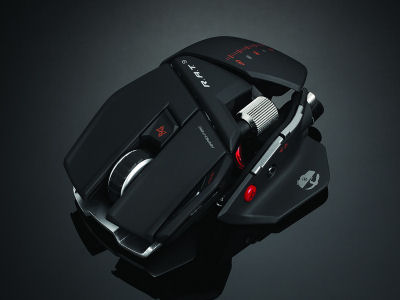
Mad Catz Cyborg R.A.T. Mouse
Overall quality of the mouse is also important. Mice are used extensively even while you aren’t gaming. With such heavy usage, they tend to wear off. The scroll wheel and the mouse clicks are usually the first to fail. The pads at the bottom of the mouse also take a battering. Look for mice with solid mouse clicks and scroll wheels. Opting for smooth fabric-based mousepads over hard pads might be a good investment as well. They help the mouse glide and so wear on the mouse feet is also reduced drastically. There are some other nifty features being added to new mouse, such as the ability to store your settings and profiles in the mouse’s internal memory, so you can move from one PC to another without losing your customized settings. Once you do get the mouse you wanted, you're ready to take on the world of competitive gaming. Just make sure you have the sensitivity for the mouse setup right, and you're good to go!

Saturday, 16 June 2012

Get gaming with budget Mice


No PC gaming enthusiast is ever going to be content with a typical  5.38 $ mouse from the local store. He’s looking for something that’ll give him the edge over the rest when it comes to online multiplayer games. When someone decides to spend 896.70 $ on a high-end gaming rig, it’d be wrong to skip out on a decent mouse. While mice start from as low as a 1.79 $ and go right up to 143.47 $ and more, the sweet spot for a good gaming mouse is between Rs 17.93$ and 44.84 $. Here are a few such options that should get you on your way.


GiGabyte m6800

There used to be a few good gaming mice under the 17.93 $ bracket. The Logitech MX310 used to be popular while the MX518 was new, but since then, very few manufacturers have been able to offer good performance, let alone features and design, at that cost. The most unlikely brand has an offering though. The Gigabyte M6800 happens to be a solid performer and a decently sized mouse for gamers. Priced at around 12.55 $, it’s easily one of the cheapest performance mice around.


Logitech mX518

The Logitech MX518 is legendary. It’s more than four years old now and it’s still got a ton of firepower.  There have been some revisions and changes since the first model launched, but the recipe hasn’t change a lot – a 1800 DPI sensor, a fancy looking design with great quality click buttons, DPI switches, an ergonomic design, and solid build quality. If you’re looking for a newer model with similar traits, look out for the Logitech G400. It’s almost identical in terms of size and ergonomics, but has an upgraded sensor. Although not officially released in India, you may be able to find it on some online stores or with some retailers.

Razer DeathaDDer 3.5G

Razer has been in the gaming mice market for more than a decade now. Their DeathAdder mouse has gained a reputation for being one of the best and popular mice for competitive gaming. The DeathAdder 3.5G, like the newer MX518 mouse, is updated with a new sensor while the rest of the mouse has stayed exactly the same for a while.


RAZER ABYSSUS

The Abyssus is at the base of the product pyramid from Razer. It offers a good amount of performance in a simple body and a simple set of buttons. For most gamers, this is more than enough. The price of  26.45 $ makes it as affordable and lethal as the MX518, although it isn’t as solidly built.


COOLER MASTER SPAWN

The Cooler Master Spawn is the weirdest looking mouse of the lot, but it’s quite a performer and the comfort level of the mouse is pretty impressive. Priced at just under 35.87 $, it’s a great purchase if you have a large palm and use the palm grip. It uses a 3500 DPI sensor, supports 1000 Hz refresh rates and supports storing of profiles in the internal memory.

Tuesday, 12 June 2012

Super Cheap HTPC


Have an old PC or laptop lying around? Why not convert it into an HTPC and enjoy your music and movies stored on it or streamed from a centrally located media server.


Most of you will have a desktop PC or laptop just lying around simply because it’s either too old for daily use and the resale value is too low for you to bother with it. Why not convert it into an HTPC (home theater PC) for use in your living room or bedroom? You don’t need any large capacity hard drives, high-end graphics cards or even an expensive operating system for the HTPC conversion. All you would need is your bank of media files either stored on the hard drive, external storage or on a DLNA/UPnP compatible NAS. 
On booting from the USB drive, choose the XBMCLive option unless you intend
to permanently install the XBMC OS on your PC's internal hard drive.
                                
You need to initially setup the networking parameters. Unless your router
assigns the IP address via the DHCP server, you should specify the IP address.
Once done, you must add the source of your media files, be it the internal hard
drive, a USB storage, a NAS, PC or SAMBA share, or DLNA server.
Select the source(s) accordingly and add them to the list. Once done, you will be
able to select the source of your media files in the begining.


                       In this workshop, we will show you how you can use XBMC Live (formerly known as Xbox Media Center) on an old PC and connect it to your LCD TV to enjoy your movies and music on the network. XBMC is an open source cross-platform media player and home entertainment system application designed for a living room TV. It has a graphical user interface and allows one to play video, photos, music and podcasts on your TV. XBMC Live is a free Ubuntubased Linux distribution with XBMC for Linux pre-installed and pre-configured, and hence we can avoid the purchase of an expensive operating system such as Windows. For this workshop, all you need is a regular x86-based PC and a blank CD or a 1 GB USB pen drive. Your media files can either be on your PC’s internal hard drive, external storage on a media server available on your network. This server can either be a Windows PC with Windows Media Player configured to stream your movie collection, a DLNA/ UPnP compatible NAS, or a router which holds your entire media collection. 
                                First, download the XBMC Live distribution from ‘www.xbmc.org’ or use the ISO distribution in the CHIP DVD. Download a utility called ‘UNetbootin’ for Windows from http://unetbootin.sourceforge.net. This application will help you create your XBMC Live USB drive, unless you prefer burning the ISO file onto a CD. That’s all; the XBMC Live media center is ready to play your favorite flicks over the network. 
                                Connect the PC reserved for the HTPC to the LCD TV (VGA/HDMI, whichever is compatible), run your audio wiring accordingly (from the PC to the home theatre speakers or amplifier), configure the BIOS to boot from USB/CD ROM and boot the PC from the USB/CD drive. You will shortly be taken to the XBMC user interface, where you can select the ‘Live’ option. 
Add-ons and plug-ins for XBMC for playing movies and music over the Internet
can be downloaded from XBMC's interface itself.
                                If your media collection is on the internal hard drive or an external USB storage, make sure you have the drive connected before powering up the HTPC. Once the XBMC media center is running, you can browse through your collection and enjoy your favorite flicks. If your media files are located on the network server, you will need to configure the network card or WLAN adapter. Also make sure you have connected the network cable before XBMC is booting. Usually, XBMC, being based on the Ubuntu Linux distribution, installs the network drives by default. If your PC is fairly new, you might need to download the necessary drivers and setup the network accordingly. In case you face any troubles with XBMC, you can always refer to the ‘xbmc.org’ website for any issues. The website also features downloadable skins for tweaking the user interface. Additionally, you can use your Wi-Fi capable mobile phone or a Windows Media Center remote as a remote controller or you can also use XBMC to act as a media server on your network. There are several other features in XBMC waiting for you to be discovered.